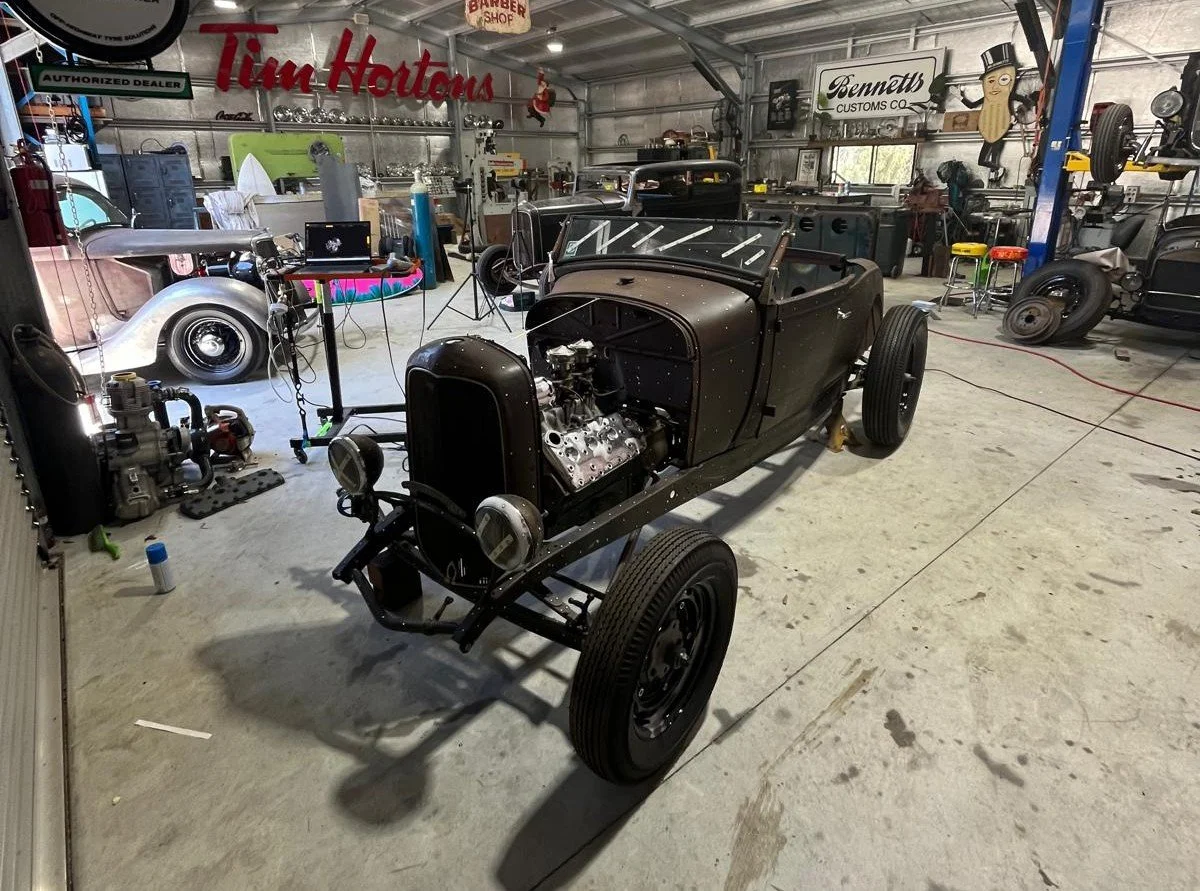
Shop Visit - Bennett’s Customs
Following along from the last post, while in Australia I spent four days in the workshop with Jordan from Bennett’s Customs. In addition to the devil head project we also spent some time on other projects. As I am based in Germany the common problem faced is not having access to the projects of my customers to develop parts. The 3D scanner allows me to capture the critical geometry needed for projects and work with customers without being on site. One of the key goals for this trip was to capture some 3D scans for future work, setup up the plasma table and 3D printers and support on a few current projects. I had my peel 3D scanner and laptop with me and was able to work in workshop while supporting Jordan.
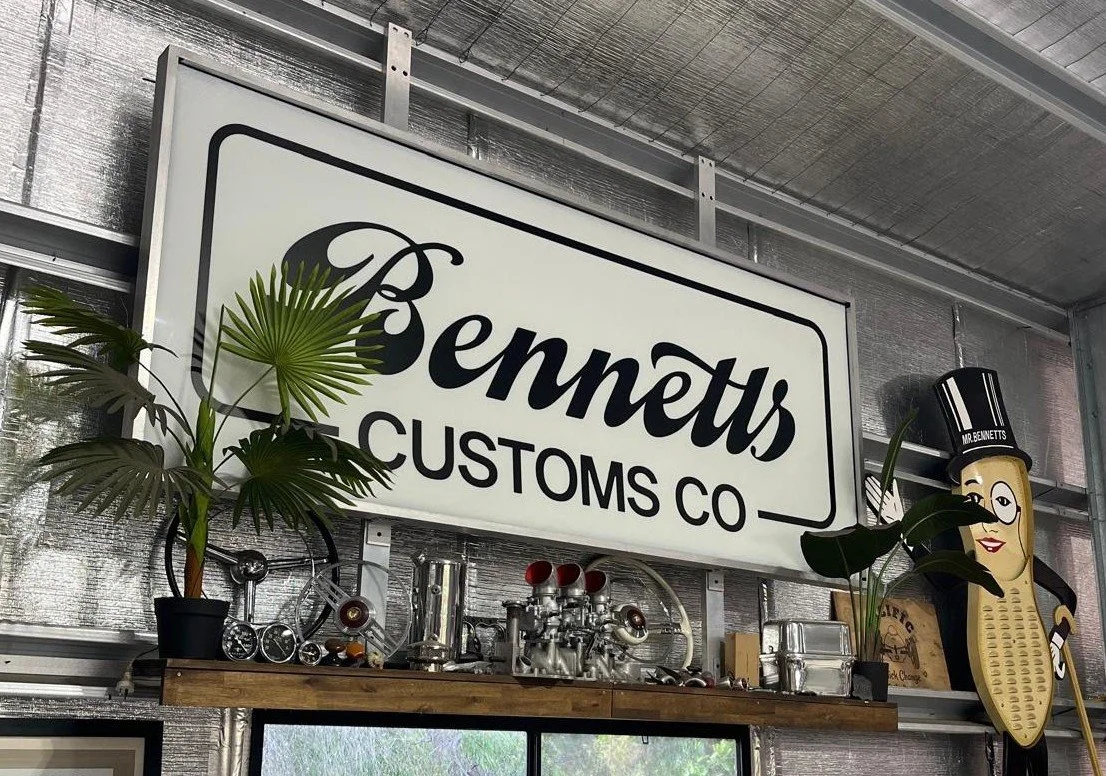
One of the main focuses of this visit was to capture as much as possible with the 3D scanner. This data can then be used to produce parts for upcoming projects. One of the main projects in the shop is the Ford roadster that Jordan has been building. This car is being built as a traditional hot rod that will be driven. In order to capture as much as possible I did a complete scan of the roadster including the body, motor, running gear and frame. Since the car is mostly metal I was able to use magnetic dots over the complete car to be used for tracking by the 3D scanner. The unique pattern of the dots is used as a reference by the scanner so it knows were it is at all times. Below is a video showing the dot layout an the first scan.
Normally the scanning process only takes an hour for the complete car, however the setup of the reference dots and positioning of all the components takes a bit more time. This is very important as the scanner will capture every detail as it is. If there is something not correctly positioned this will also be reflected in the scan and may affect the usefulness of the scan. You can see some more in the youtube video below:
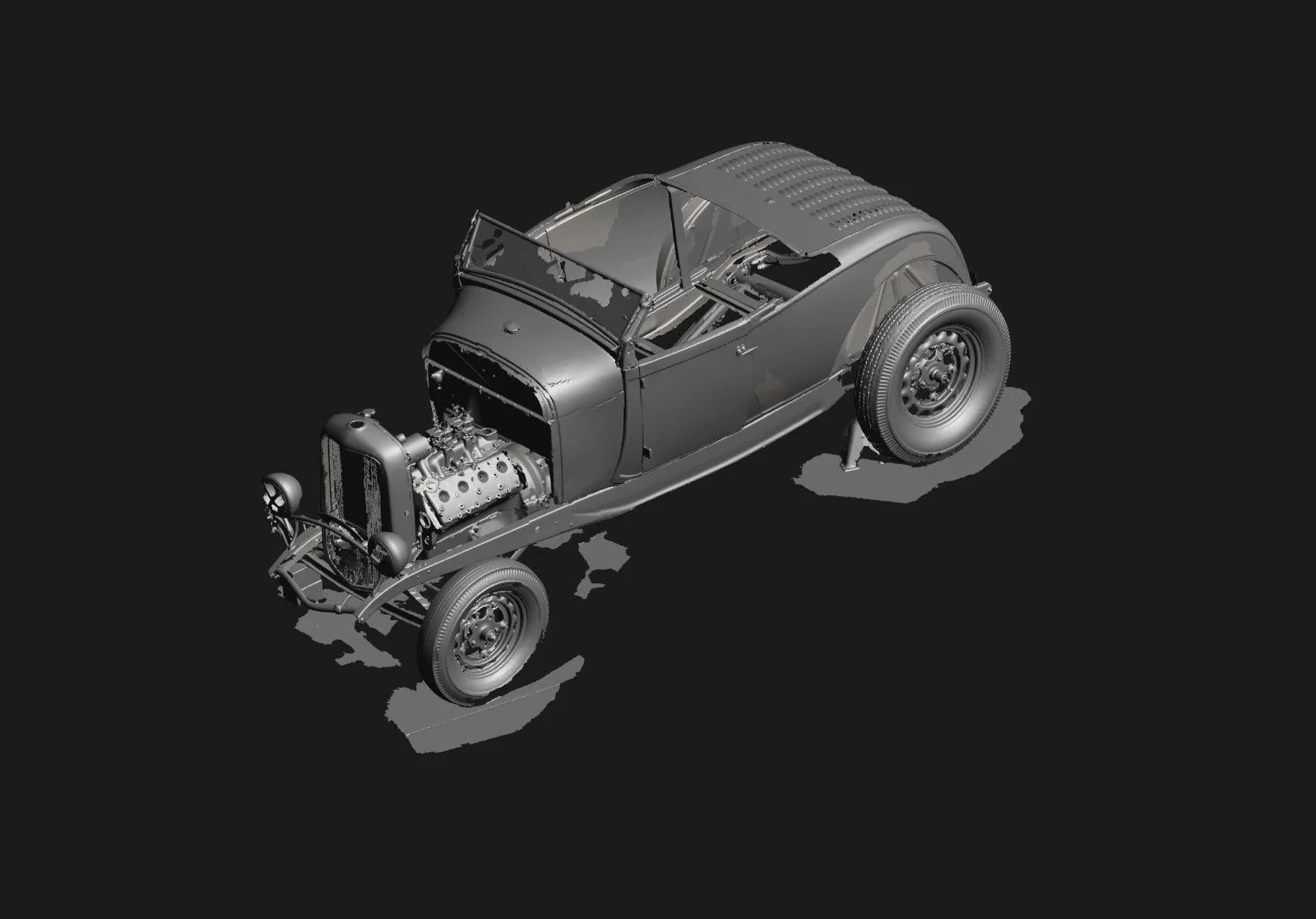
Above is the 3D scan of the roadster. This will be the reference for further development of this car and custom parts. In addition to the roadster we also scanned a lot of other singular parts as well as the boot space of another roadster. This scan will be used to develop the fuel tank mounts. In order to capture the needed geometry we positioned the fuel tank in the boot space and completed a scan, then afterwards a clean scan of the boot to capture all the sheet metal geometry. The mounts will be cut on the plasma table and welded together to produce some mounts that suit the style of the roadster.
With most of the scanning complete we moved on to the setup of the plasma table and the 3D printer. One of the most important things I have found when working remotely with clients is having the ability to produce prototypes and have them test the parts. One of the best tools for this is a 3D printer. Through using a 3D printed I am able to send clients parts to be printed in their workshop. These prints can then be checked directly on the projects they are working on and get a feel for the part and provide detailed feedback.
Client access to 3D printers is easily one of the best ways we can collaborate together and with the cost of printers falling it is a no brainer for most businesses. I setup the printer and then we got to testing it on the devil head project from my previous post. If you want to see the casting process, in the video below you can see another part I designed and Jordan 3D printed and casted:
With the 3D printer now setup we moved onto the plasma table which has been in the works at Bennett’s for quite some time. We moved the table around and Jordan went about setting everything up. Having access to a plasma table will allow for the precision cutting of sheet metal reducing the time for many projects and allowing for series production of parts. With the plasma table I am able to create parts in 3D and then produce files that can be directly cut on the plasma table.
This leads to a massive reduction in hand work and increases precision. We have a few projects in the works which we will be leveraging heavily the plasma table. Templates can also be produced for geometry verification and to aid in metal work.
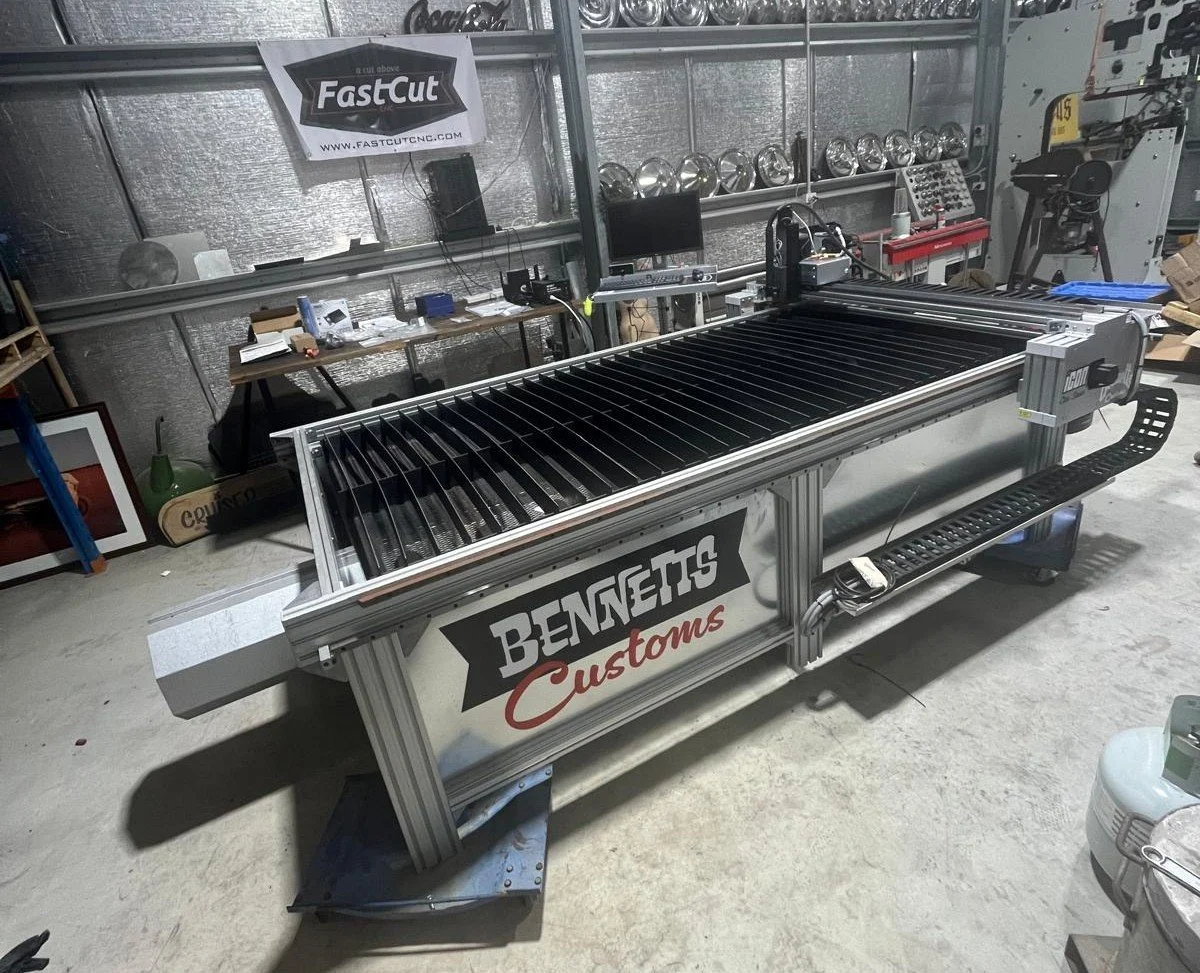
During this visit we were able to capture a bunch of data and setup some key technology to improve our collaboration and improve the manufacturing capacity at Bennett’s Customs. This trip allowed me to support in the setup of this technology which can bring many benefits to small shops like Jordan’s. I enjoy bringing my skill sets into workshops and supporting creatives in producing the projects that they have been dreaming of. Thanks to Jordan for having me in the workshop and taking the time to collaborate. Be sure to stay tuned as these projects come to life over the next months and if you would like more information, feel free to reach out.